(Re)Contextualising the Venice Charter for the transcultural heritage of contested minorities: dilemmas in the preservation of Goan Oratorian churches in Sri Lanka
DOI:
https://doi.org/10.14568/cp36912Keywords:
Sri Lankan Oratorian churches, Transcultural heritage, Contested minorities, Integrity and authenticity, Heritage chartersAbstract
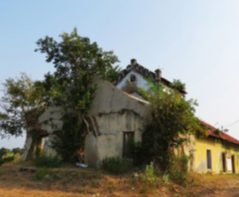
The study of Catholic minorities in Sri Lanka is complex and multifaceted owing to their unique identities shaped by centuries of colonialism, migration and cultural exchange, originating a transcultural heritage that presents a range of complexities for safeguarding. The architecture of the Oratorian churches established by Goan missionaries in Sri Lanka between the 17th and 19th centuries is perhaps the best example of transcultural heritage among the island’s (often contested) Catholic minorities and is considered an exceptional and unique heritage that is nevertheless currently threatened. Drawing on practical experience, and subsequent debate, during preliminary visits to several sites in Sri Lanka with a view to identifying Oratorian churches as candidates for UNESCO’s World Heritage Tentative List, this essay aims to address the dilemmas experienced, which highlight the need to (re)contextualise certain principles outlined in international heritage charters, especially concerning the preservation of transcultural heritage belonging to contested minorities.
Downloads
References
1. Jayasinghe, S.; Santos, J. R.; Carita, H., Remains of dark days: the architectural heritage of Oratorian missionary churches in Sri Lanka, Caleidoscópio, Casal de Cambra (2019), http://artispress.letras.ulisboa.pt/index.php/artispress/catalog/book/11 (accessed 2024-07-18).
2. Jayasinghe, S., ‘In search of a vanishing heritage: the documentation project of Oratorian Missionary Churches in Sri Lanka’, in Regenerating cultural religious heritage: intercultural dialogue on places of religion and rituals, ed. Olimpia Niglio, Springer, Singapore (2022) 199-208.
3. Jayasinghe, S., In search of a vanishing heritage: the Oratorian Churches in Northern Sri Lanka, Heritage Studio, Mount Lavinia (2021), https://sagarajayasinghe.com/research.php (accessed 2024-07-18).
4. Jayasinghe, S., ‘“Goan” but not forgotten’, in Ceylon Today (2022-07-09), https://ceylontoday.lk/2022/07/09/goan-but-not-forgotten (accessed 2024-07-20).
5. Jayasinghe, S., ‘Contemporary construction prioritises modernity, diluting tradition’, in The Morning (2024-02-24), https://www.themorning.lk/articles/Q1ak5THwsGEIP2LFj332 (accessed 2024-07-20).
6. Galla, A. (ed.), World heritage: benefits beyond borders, UNESCO Publishing / Cambridge University Press, Cambridge (2012).
7. Zouain, G. S., ‘World heritage, art and economics: the world heritage convention in the light of economic theory’, in Compression vs. expression: containing and explaining the world’s art, ed. J. Onians, Clark Art Institute, Williamstown (2006) 94-110.
8. Licciardi, G.; Amirtahmasebi, R. (eds.), The economics of uniqueness: investing in historic city cores and cultural heritage assets for sustainable development, International Bank for Reconstruction and Development, Washington DC (2012).
9. Bertacchini, E.; Revelli, F.; Zotti, R., ‘The economic impact of UNESCO world heritage: evidence from Italy’, Regional Science and Urban Economics 105 (2024) 103996, https://doi.org/10.1016/j.regsciurbeco.2024.103996.
10. PricewaterhouseCoopers LLP, ‘The costs and benefits of UK world heritage site status’, report, Department for Culture, Media and Sport, London (2007), https://assets.publishing.service.gov.uk/media/5a75864b40f0b6360e474c73/PwC_fullreport.pdf (accessed 2024-07-22).
11. ‘World Heritage List [Sri Lanka]’, in UNESCO World Heritage Convention (2025), https://whc.unesco.org/en/list/?search=&search_by_country=sri+lanka&type=®ion=&order= (accessed 2024-07-20).
12. ‘Great Living Chola Temples’, in UNESCO World Heritage Convention (2025), https://whc.unesco.org/en/list/250 (accessed 2024-07-20).
13. Shrestha, S; Baral, A.; Thapa, S.; Shreesh, K.; Shrestha, M; Thapa, D. (eds)., ‘South Asia state of minorities report 2022: weakening human rights commitments and its impact on minorities’, in Minority rights group, online (2022), https://minorityrights.org/app/uploads/2023/12/sasm2022.pdf (accessed 2024-07-20)
14. Perera, M. M., ‘Catholic Church attacked, suspicions fall on Buddhist extremists’, in AsiaNews (2009-09-12), https://www.asianews.it/news-en/Catholic-Church-attacked,-suspicions-fall-on-Buddhist-extremists-17072.html (accessed 2024-07-20).
15. Kurukulasuriya, U., ‘Militant Sinhalese Buddhist nationalism: context of the religious freedom’, in Colombo Telegraph (2012-04-25), https://www.colombotelegraph.com/index.php/militant-sinhalese-buddhist-nationalism-context-of-the-religious-freedom (accessed 2024-07-20).
16. Perera, M. M., ‘After Buddhist monks beat Christian, Methodist bishop insists Christians are citizens of the country’, in AsiaNews (2019-12-08), https://www.asianews.it/news-en/After-Buddhist-monks-beat-Christian,-Methodist-bishop-insists-Christians-are-citizens-of-the-country-47734.html (accessed 2024-07-20).
17. ‘Armed guards for Sri Lanka church’, in BBC News (2004-01-37), http://news.bbc.co.uk/2/hi/south_asia/3434145.stm (accessed 2024-07-20).
18. Saiya, N., ‘Religious repression and the Easter attacks: the hidden connection’, in The Diplomat (2019-04-30), https://thediplomat.com/2019/04/religious-repression-and-the-easter-attacks-the-hidden-connection (accessed 2024-07-20).
19. Amerasinghe, J., The protection of culture, cultural heritage and cultural property, National Trust - Sri Lanka, Colombo (2006).
20. Harris, E. J., ‘Contested histories, multi-religious space and conflict: a case study of Kantarodai in Northern Sri Lanka’, Religions 10 (2019) 537, https://doi.org/10.3390/rel10090537.
21. Kotelawala, H. ‘Tamil Buddhism in Sri Lanka: a study in historical expedience’, in EconomyNext (2023-06-13), https://economynext.com/tamil-buddhism-in-sri-lanka-a-study-in-historical-expedience-123372 (accessed 2024-07-20).
22. Pieris, P. E., ‘Nagadeepa and Buddhist Remains in Jaffna’, Journal of the Royal Asiatic Society - Ceylon Branch XXVI(70) (1917) 11-30.
23. Schalk, P.; Vēluppiḷḷai, Ā (eds.), Buddhism among Tamils in Pre-colonial Tamiḻakam and Īḻam: Part One. Prologue - The Pre-Pallava and the Pallava period, Uppsala Universitet, Uppsala (2002).
24. Schalk, P.; Vēluppiḷḷai, Ā (eds.), Buddhism among Tamils in Pre-colonial Tamiḻakam and Īḻam: Part Two. The Period of the Imperial Cōḻār, Uppsala Universitet, Uppsala (2002).
25. Schalk, P.; Nahl, A. (eds.), Buddhism among Tamils in Tamilakam and Īlam: Part Three. Extension and Conclusions, Uppsala Universitet, Uppsala (2013).
26. UNESCO, ‘The operational guidelines for the implementation of the world heritage convention’, in UNESCO World Heritage Convention (2025), https://whc.unesco.org/en/guidelines (accessed 2024-07-20).
27. Jayasinghe, S., Goan Oratorian missionary churches in Ceylon: origins, evolution, and synthesis, PhD dissertation, Faculdade de Letras, Universidade de Lisboa, Lisboa (2025).
28. ‘The NARA document on authenticity (1994)’, in UNESCO World Heritage Convention (1994), https://www.icomos.org/en/charters-and-texts/179-articles-en-francais/ressources/charters-and-standards/386-the-nara-document-on-authenticity-1994 (accessed 2024-07-20).
29. Lewcock, R.; Sansoni, B.; Senanayake, L. The architecture of an Island: the living heritage of Sri Lanka, Barefoot, Colombo (1998).
30. Jokilehto, J., A history of architectural conservation, Butterworth-Heinemann, Oxford (1999).
31. Stanley-Price, N.; King, J. (eds.), Conserving the authentic: essays in honour of Jukka Jokilehto, ICCROM, Rome (2009).
32. Santos, J. R. (ed.), Preserving transcultural heritage: your way or my way?, Caleidoscópio, Casal de Cambra (2017).
33. Jayasinghe, S., ‘Altares decorativos de igrejas missionárias oratorianas no Sri Lanka’, in Artis - Revista de História da Arte e Ciências do Património 7-8 (2020) 216-219.
34. ‘Charters and other doctrinal texts’, in ICOMOS - International Council on Monuments and Sites, https://www.icomos.org/charters-and-doctrinal-texts (accessed 2024-07-20).
35. Brown, M. F., Who owns native culture?, Harvard University Press, Cambridge (2003).
36. Tuhiwai-Smith, L., Decolonizing methodologies: research and indigenous peoples, University of Otago Press, Dunedin (1999).
37. Schneider, A. (ed.), Art, anthropology, and contested heritage, Bloomsbury Academic, New York (2019).
38. Silverman, H. (ed.), Contested cultural heritage: religion, nationalism, erasure, and exclusion in a global world, Springer, New York (2010).
39. Bardeschi, M. D., Restauro: punto e da capo - frammenti per una (impossibili) teoria, Franco Angeli, Milan (1991).
40. Marconi, P., L’architettura restaurata: duplicazioni, copie, restauro, Nuova Italia Scientifica, Rome (1994).
41. Moreno-Navarro, A. G., La restauración objetiva, Diputació de Barcelona, Barcelona (1999).
42. Byrne, D., Counterheritage: critical perspectives on heritage conservation in Asia, Routledge, New York (2014).
Downloads
Published
How to Cite
Issue
Section
Categories
License
This work is distributed under a Creative Commons Attribution License (CC BY-NC-ND 4.0) which permits use, distribution, and reproduction in any medium following no commercial or derivatives, provided the original author and source are credited.
Copyright remains with the authors.