Cleaning books with light? Plasma treatment on mould infested paper
DOI:
https://doi.org/10.14568/cp39266Keywords:
Paper conservation, Mould growth, Infestation, Blocked paper, Decontamination, Atmospheric cold plasmaAbstract
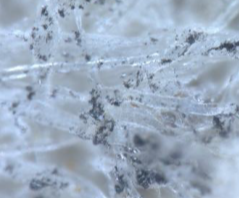
In this model-based study the effect of atmospheric pressure plasma on rag paper and mould infested paper is determined. Visual examinations with a digital microscope show the removal of mould from the surface, changes of surface properties of selected papers and micro-damages to the paper fibres occurring during the treatment process. As plasma generates highly reactive chemical components, Ozone and UVC radiation are also present and have an influence on the treated surface. Therefore, single treatments of air plasma, hydrogen-argon, oxygen-argon plasma and Ozone and UVC treatments are compared. The results show that comparing to the Ozone and UVC treatment the plasma treatments show less damage on the paper surface and the removal of the mould is more effective. But it can also be seen that the oxidizing effect of plasma has an impact on the cellulose fibres.
Downloads
References
1. Floss, B., The use of cyclododecane for separation of blocked paper, Master dissertation, Department of applied Science and Art, HAWK University, Hildesheim (2019).
2. ‘Final report DBU-project, Az 37062/01, Referat 45: Entwicklung einer neuartigen enzymatisch basierten Dekontaminierung von stark mikrobiell geschädigtem Schriftgut am Beispiel historisch wertvoller Handschriften und Druckwerke‘, in DBU, https://www.dbu.de/projektdatenbank/37062-01/ (accessed 2024-11-27).
3. Jiao, R.; Sun, F.; Zeng, S.; Li, J., ‘Application of low-temperature plasma for the conservation of cultural heritage: a brief review’, Journal of Cultural Heritage 63 (2023) 240-248, https://doi.org/10.1016/j.culher.2023.08.009.
4. Galmiz, O.; Tucekova, Z. K.; Kelar, J.; Zemanek, M.; Stupavska, M.; Kovacik, D.; Cernak, M.‚ ‘Effect of atmospheric pressure plasma on surface modification of paper’, AIP Advances 9(10) (2019) 105013, https://doi.org/10.1063/1.5124149.
5. Li, Q.; Xi, S.; Zhang, X., ‘Deacidification of paper relics by plasma technology’, Journal of Cultural Heritage 15(2) (2014) 159-164, http://dx.doi.org/10.1016/j.culher.2013.03.004.
6. Tiňo, R.; Vizárová, K.; Krčma, F., ‘Plasma surface cleaning of cultural heritage objects’,; in Nanotechnologies and Nanomaterials for Diagnostic, Conservation, and Restauration of Cultural Heritage, eds. G. Lazzara & R. Fakhrullin, Elsevier, Amesterdam (2019) 240-275, https://doi.org/10.1016/B978-0-12-813910-3.00011-2.
7. Gerullis, S.; Pfuch, A.; Beier, O.; Kretzschmar, B.; Beyer, M.; Fischer, S.: ‘Plasma treatment of cellulose: investigation on molecular changes using spectroscopic methods and chemical derivatization’, Cellulose 29 (2022) 7163-7176, https://doi.org/10.1007/s10570-022-04718-z.
8. Kolářová, K.; Vosmanská, V.; Rimpelová, S.; Švorčík, V.: ‘Effect of plasma treatment von cellulose fiber’, Cellulose 20 (2013) 953-961, https://doi.org/10.1007/s10570-013-9863-0.
9. Hoppanová, L.; Kryštofová, S., ‘Nonthermal plasma effects on fungi: applications, fungal response, and future perspectives’, International Journal of Molecular Sciences 23(19) (2022) 11592, https://doi.org/10.3390/ijms231911592.
10. Vizárová, K.; Kalǐnáková, B.; Tǐno, R.; Vajová, I.; Cǐzová, K., ‘Microbial decontamination of lignocellulosic materials with low-temperature atmospheric plasma’, Journal of Cultural Heritage 47 (2021) 28-33, https://doi.org/10.1016/j.culher.2020.09.016.
11. Scholtz, V.; Pazlarova, J.; Souskova, H.; Khun, J.; Julak, J., ‘Nonthermal plasma − a tool for decontamination and disinfection’, Biotechnology Advances 33(6) (2015) 1108-1119, https://doi.org/10.1016/j.biotechadv.2015.01.002.
Downloads
Published
How to Cite
License
This work is distributed under a Creative Commons Attribution License (CC BY-NC-ND 4.0) which permits use, distribution, and reproduction in any medium following no commercial or derivatives, provided the original author and source are credited.
Copyright remains with the authors.